
A lagoon of strategic importance
Bacalar lies at 18°40' North and 88°23' West, on the shore of the lagoon that bears its name, in the south of the present-day state of Quintana Roo. Thanks to its location and its connections with the sea and the surrounding region, Bacalar was a place of strategic importance from pre-Hispanic times until the end of the 19th century.
From the lagoon, small shallow boats can follow the Chaac estuary to the Río Hondo, and from there travel into the forests of the south-west or out to the sea in today's Bay of Chetumal. Sailing along the 42-kilometre lagoon also spared travellers from crossing the dense low jungle.
The Maya world
The Maya settled a vast territory that includes the Mexican states of Yucatán, Campeche and Quintana Roo, parts of Tabasco and Chiapas, as well as Guatemala, Belize and the western parts of Honduras and El Salvador. Their pre-Hispanic history covers almost 3,400 years, from the first villages around 1800 BC to the gradual subjection to the Spanish Crown from the 16th century onwards.
Over the Preclassic, Classic and Postclassic periods, villages grew into cities ruled by an elite invested with sacred powers, science and art flourished, and later, in the Postclassic, militarism and trade gained importance in the north of the peninsula. Maize was the cultural and economic heart of Maya life, considered the sacred substance from which humans were made. Hunting, fishing and beekeeping complemented farming.
Bakhalal, "the place of reeds"
The name Bacalar comes from the Maya Siyancaan Bakhalal, from syan caan, "birth", and bakhalal, "place of reeds". According to the exhibit, it was founded in 435 AD by the Itzáes, a branch of the Putún or Chontal Maya who came from the area between the mouths of the Usumacinta and Grijalva rivers, south of present-day Tabasco.
Sixty years later a group of Itzáes left Bakhalal for the north of the peninsula, where they founded Chichén Itzá. Several centuries later, around 900 AD, they returned there and made it the most important city in the region.
Trade became central to Maya life in the Postclassic period. It was based on luxury goods such as jade, shells, feathers and gold, as well as cotton, wax, honey and salt. Most goods travelled by sea in long canoes more than two metres wide, inland along rivers and the sacbé or "white roads", and cacao beans served as money. Bakhalal stood out as a trading centre and supplied canoes to the people of the region.
On the eve of the Spanish conquest
Around 1200 AD Mayapán surpassed Chichén Itzá and led a confederation of the great northern cities. In the mid-15th century a rebellion broke up the confederation, leaving the peninsula politically fragmented and in constant war. When the Spaniards arrived, Yucatán was divided into 16 chiefdoms (cacicazgos); Tazes, Ecab, Cochuah, Chactemal and Uaymil occupied what is now Quintana Roo. Bakhalal, part of the Uaymil chiefdom, was the most important town of the flourishing and densely populated south-east of the peninsula.
Gonzalo Guerrero and the first mestizos
In 1511 a ship sailing from Darién (Panama) to Santo Domingo under the command of Pedro de Valdivia was wrecked near Jamaica. The survivors, crowded into a boat without sails, drifted on the currents to the coast of Yucatán. Captured by the Maya, some were sacrificed and others died of disease. Only two survived: Jerónimo de Aguilar and Gonzalo Guerrero.
After two years of slavery, Guerrero was separated from his companion and given to Nachan Can, chief of Chactemal. He adopted Maya culture, fought alongside the Maya and became a military leader. He married a noblewoman, and their three children were the first Mexican mestizos.
When Hernán Cortés landed in Cozumel in 1519 he rescued Aguilar, but Guerrero chose to stay with the Maya and help them resist the conquerors. Some historians say he died in Honduras, fighting in the battle in which Pedro de Alvarado took the stronghold of chief Cocumba in the Ulúa river valley.
The first Spanish expeditions
Three expeditions from Cuba explored Yucatán: Francisco Hernández de Córdoba landed on Isla Mujeres in 1517, Juan de Grijalva explored Cozumel and the coast of Tulum in 1518, and Hernán Cortés reached Cozumel in 1519 with captains Francisco de Montejo and Alonso Dávila.
Conquest and the founding of Salamanca de Bacalar
In 1526 Francisco de Montejo obtained from Emperor Charles V the right to conquer, colonise and govern Yucatán. The warlike spirit of the Maya turned the conquest into a long and difficult enterprise that lasted 20 years. Montejo's first settlements, founded from Cozumel in 1527, had to be abandoned, and Alonso Dávila's town of Villa Real, near present-day Chetumal, was also given up under Maya attacks. In 1541 the main chiefdoms surrendered at T-hó (Mérida), but Uaymil and Chactemal still resisted.
Montejo sent Gaspar Pacheco, with his son Melchor and his nephew Alonso, to complete the conquest in a cruel and relentless campaign. In 1544, on the bodies and rubble of Bakhalal, Pacheco founded the Villa de Salamanca de Bacalar; the region was subdued by 1546. In a testimony quoted in the exhibit, Lorenzo de Bienvenida described how many Maya were killed, thrown into the lagoons or attacked by war dogs, and how survivors fled and stopped planting, dying of hunger.
Pirates and the Fort of San Felipe
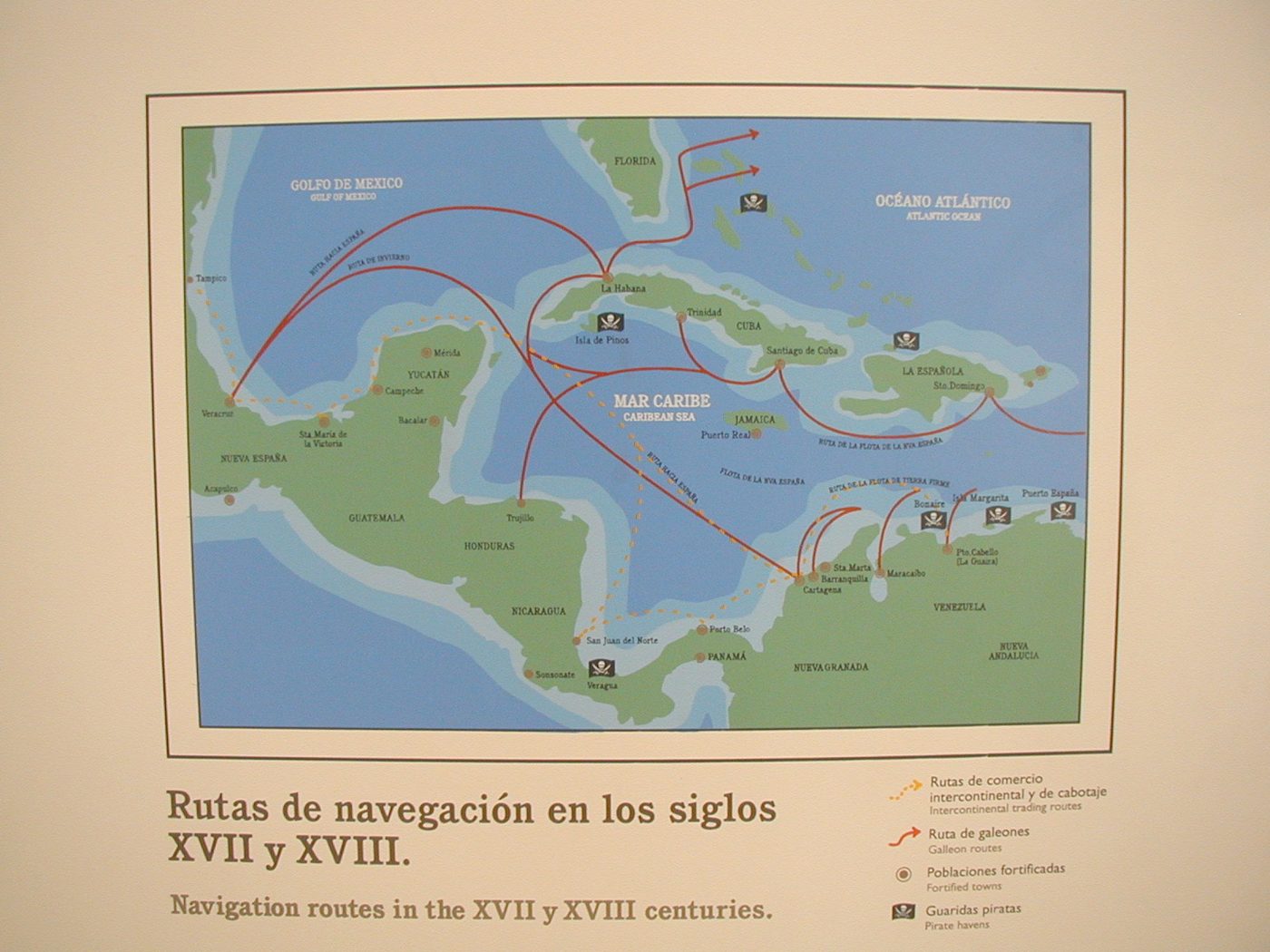
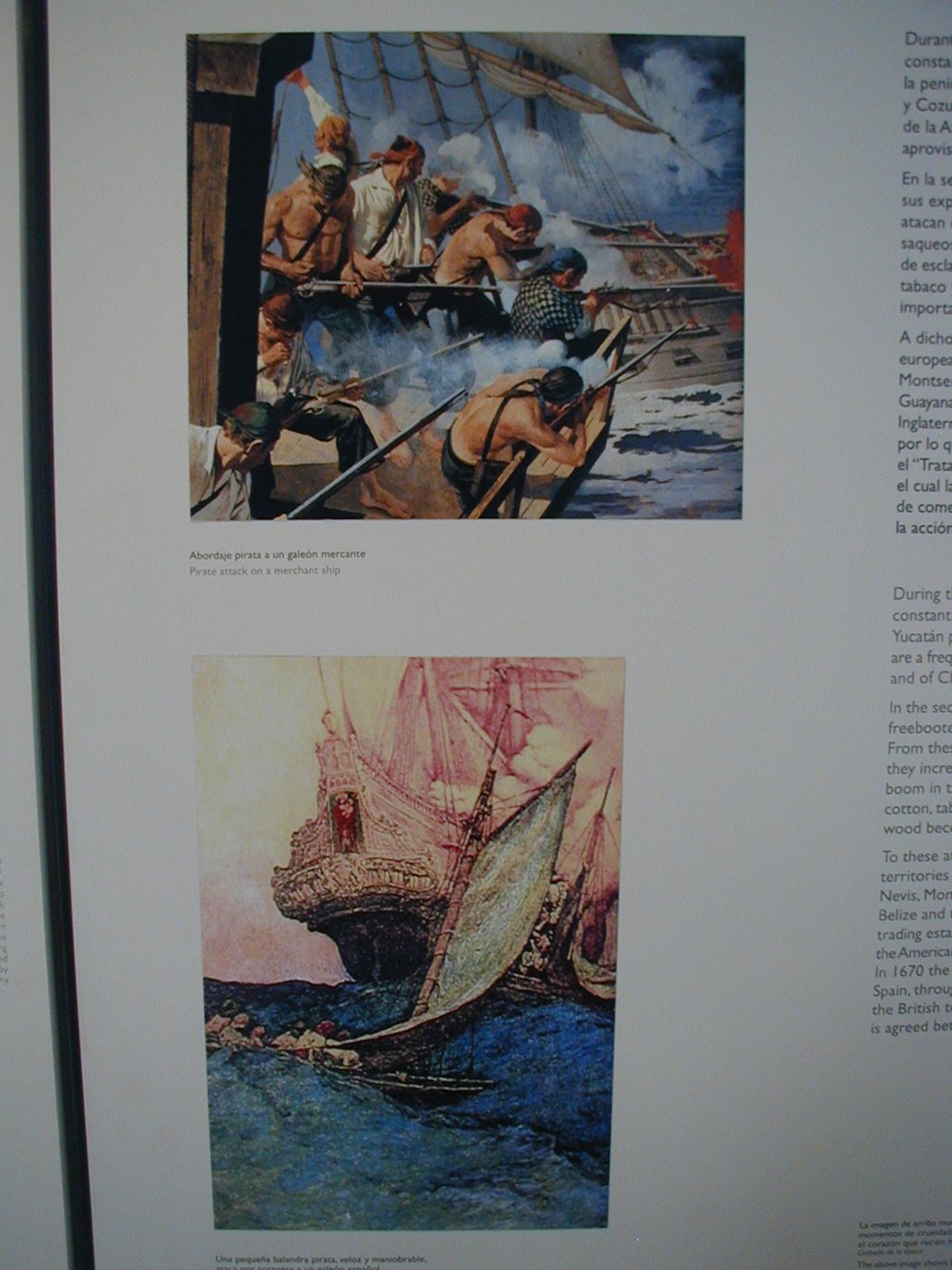
Spain imposed a trade monopoly on its colonies, and for almost three centuries it had to defend its fleets and fortify its ports against pirates, privateers and buccaneers. In the 16th century Bacalar, Isla Mujeres and Cozumel were frequent targets of pirates, and the bays of Ascensión and Chetumal served them as hideouts and supply bases.
To protect Bacalar from pirates and logwood smugglers, construction of the Fort of San Felipe began in 1733. A moat lined with sharp stakes made its walls almost impossible to take, and its only access was a wooden drawbridge. It was strengthened throughout the 18th century.
The Caste War
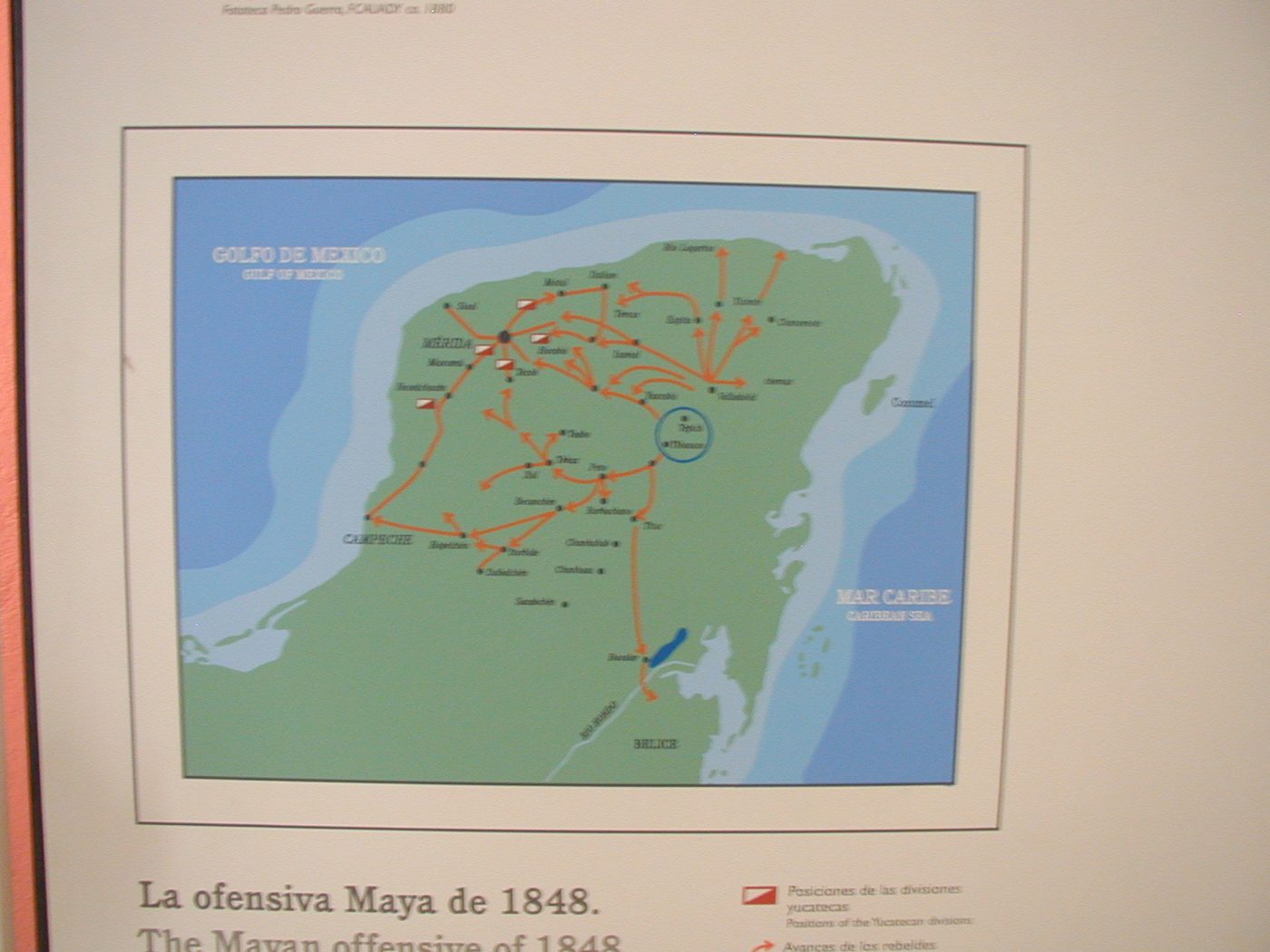
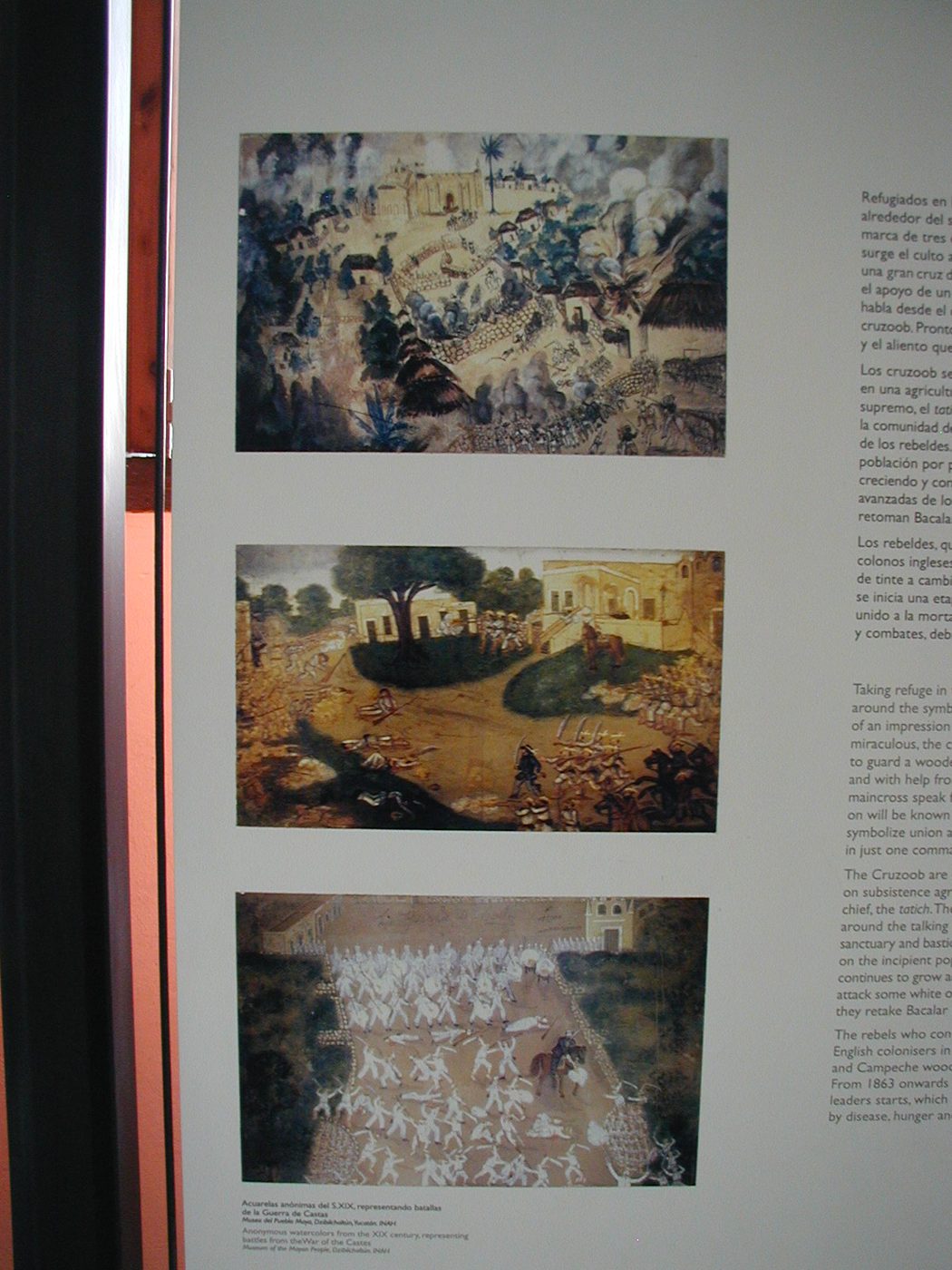
By 1847 Yucatán was on the brink of explosion. Sugar haciendas expanded onto Maya communal lands, impoverishing and displacing the Maya, who still had to pay tithes and taxes and work for the white landowners. After the execution of the Maya leader Manuel Antonio Ay, rebels led by Cecilio Chi took the village of Tepich on 30 July 1847, beginning the Caste War. Soon two thirds of the peninsula, including Bacalar, were in rebel hands, and by May 1848 the Maya stood at the gates of Mérida. When the rains came, many returned home to plant and government troops retook the main towns.
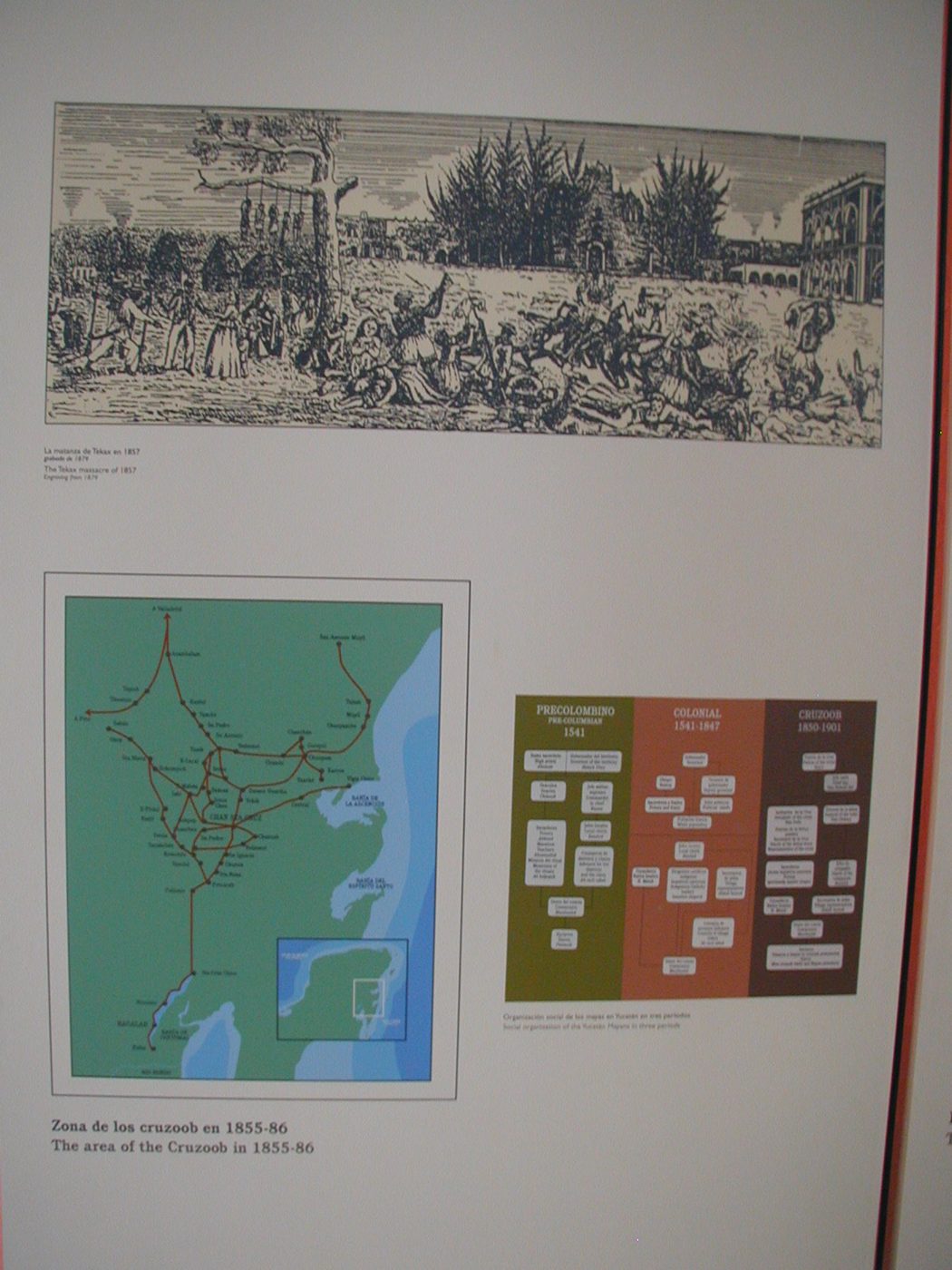
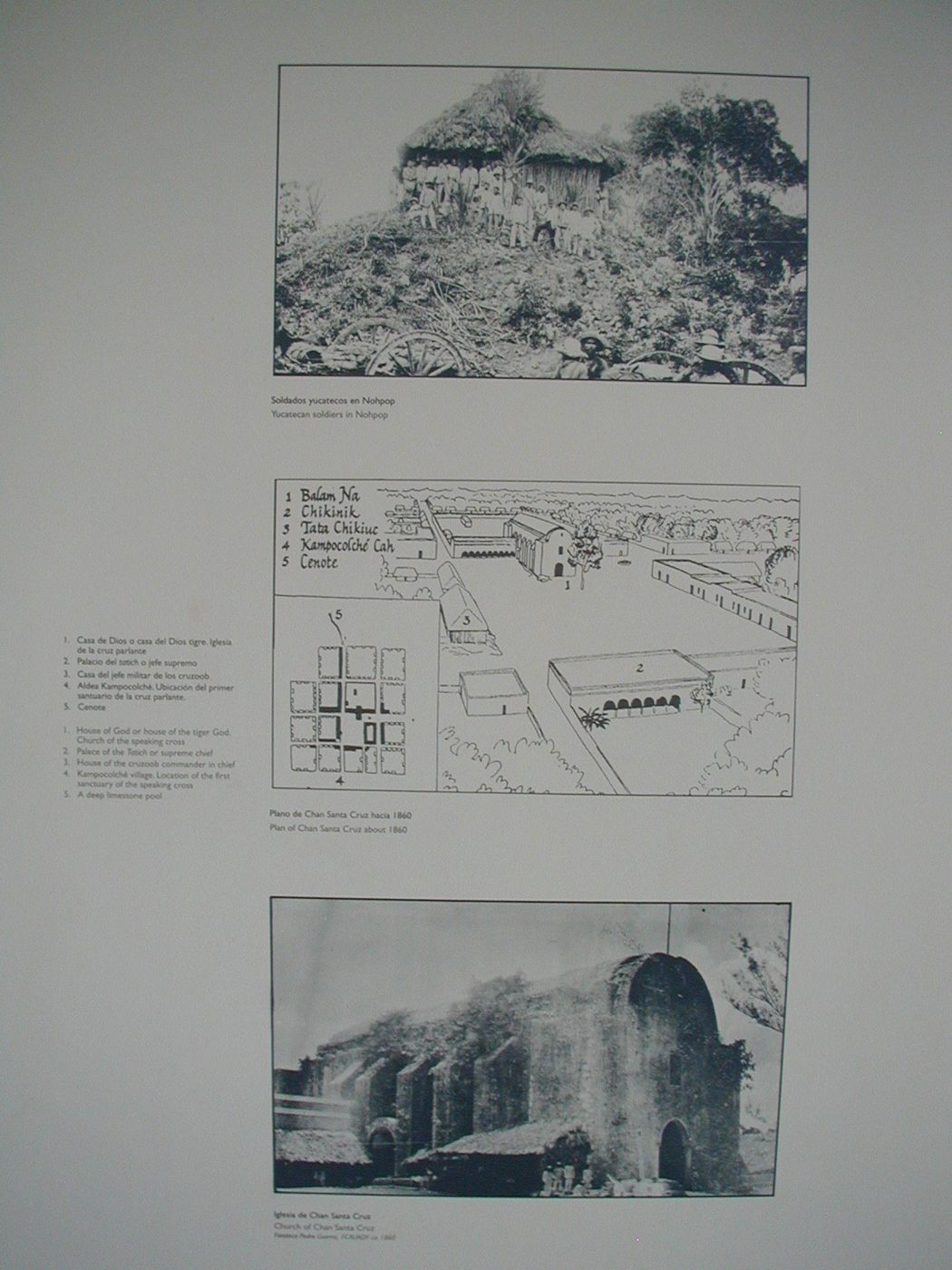
In the jungle the rebels built a world around the cult of the Talking Cross, and became known as the Cruzoob. Their sanctuary, Chan Santa Cruz, grew into a militarised community under a supreme chief, the tatich. The Cruzoob retook Bacalar in 1858 and traded with the English settlers of Belize, exchanging mahogany and logwood for weapons.
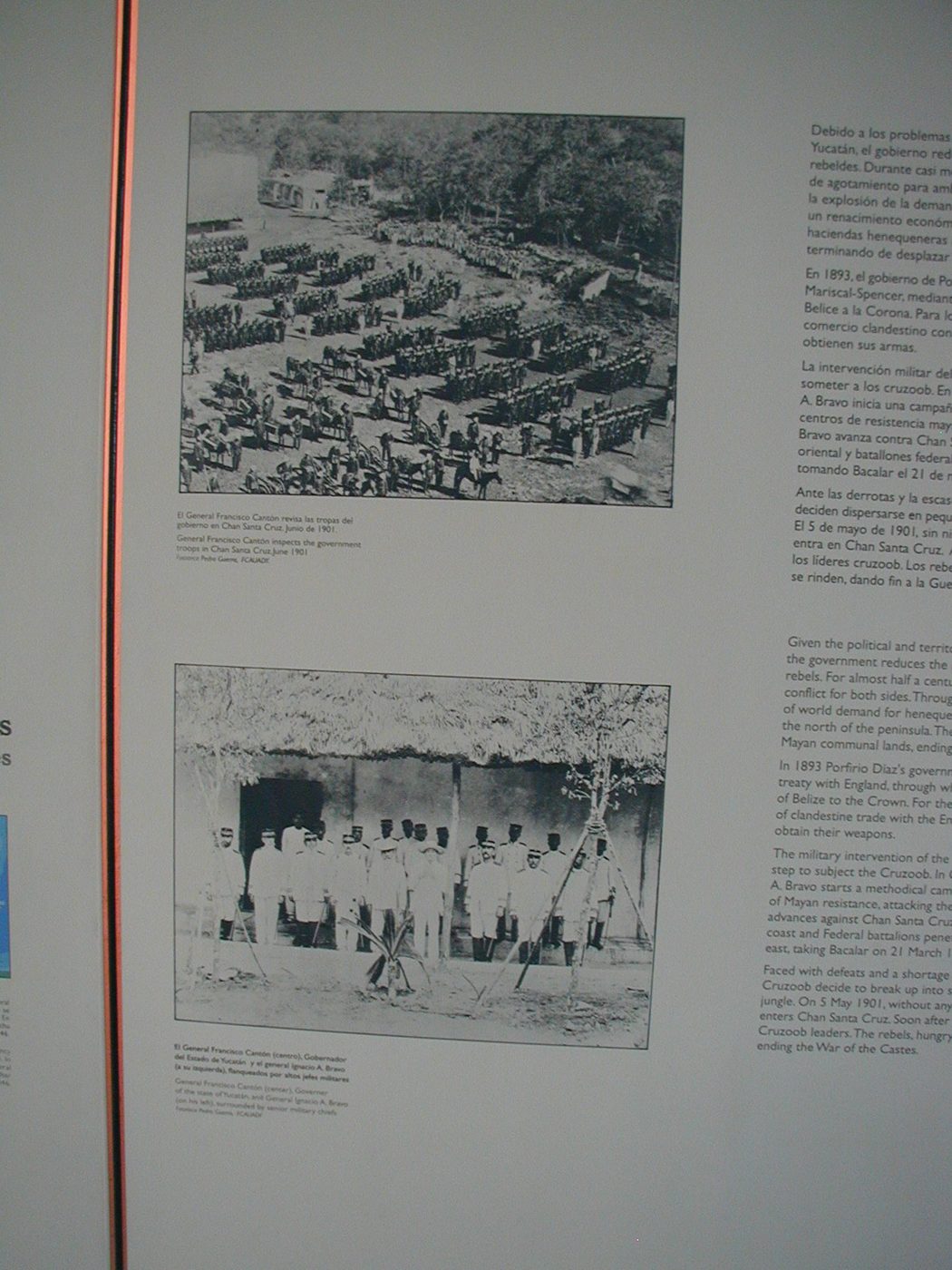
The war dragged on for half a century. In 1893 the Mariscal-Spencer treaty recognised British sovereignty over Belize and cut off the rebels' supply of arms. In 1899 General Ignacio A. Bravo began the final campaign; federal troops took Bacalar on 21 March 1901 and entered Chan Santa Cruz without resistance on 5 May 1901, ending the Caste War.
From Payo Obispo to Quintana Roo
To control the border with Belize, the Porfirio Díaz government stationed a floating customs post, the pontoon Chetumal, at the mouth of the Río Hondo in 1898. Its commander, Captain Othón P. Blanco, founded the town of Payo Obispo there on 5 May 1898; in 1936 it was renamed Chetumal.
During the 20th century Bacalar was gradually repopulated. The Territory of Quintana Roo was created in 1902, with an economy based on timber, salt and above all chicle. After the decline of chicle and timber, the region turned to sugar cane, rice and, finally, tourism, and in October 1974 Quintana Roo became a free and sovereign state of Mexico.