Page rescued from our archive (1995 to 2010).
You may remember this hotel or place from when you visited Cancun.
The information, prices and contacts are outdated: this page is only here to refresh your memory.
Let's remember the past: the places where Cancun began.
This tour today
Cancun: Scuba Diving for Beginners, 2 Dives
No certification needed: MUSA + reef, 2 tanks · 5 h
★ 5.0 (209 reviews)- Pool lesson and theory
- 2 dives: MUSA underwater museum + Manchones reef
- Full equipment and wetsuit
- Hotel transportation
SCUBA DIVE IN CANCUN - RIVIERA MAYA
CAVE DIVING - CENOTES DIVING
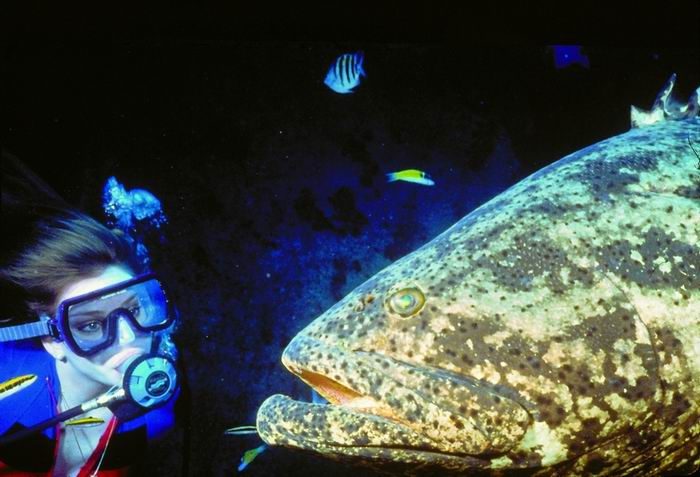
Cancun in a privileged site. Its strong currents enable it to maintain a high visibility. You can found shark, turtles, stingrays, dolphins and perhaps a whale. With more of 20 dive sites, it is an alternative to sports, fun, dinning and other entertainment options available.
Diving on Isla Mujeres is personalized and friendly, you won't find yourself squeezed in a boat with 20 other divers aboard. A tranquil trip to Manchones reef is a delight at depths of just 30 feet.
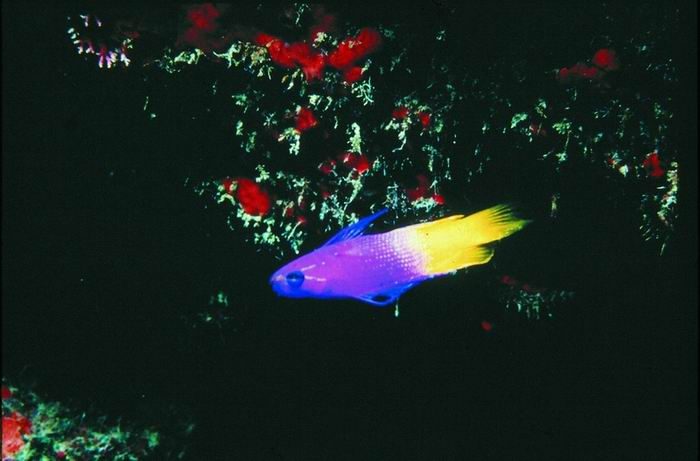
Manchones Chicos is made up of separated blocks of coral that reach up to the surface where fan coral, sponges and a great quantity of tropical fish await.
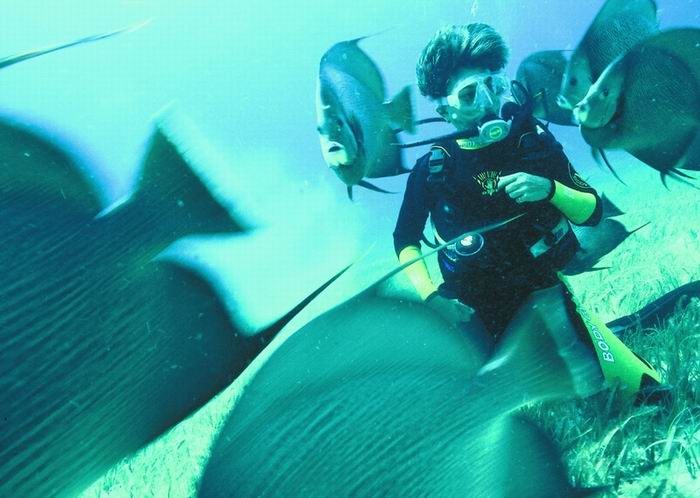
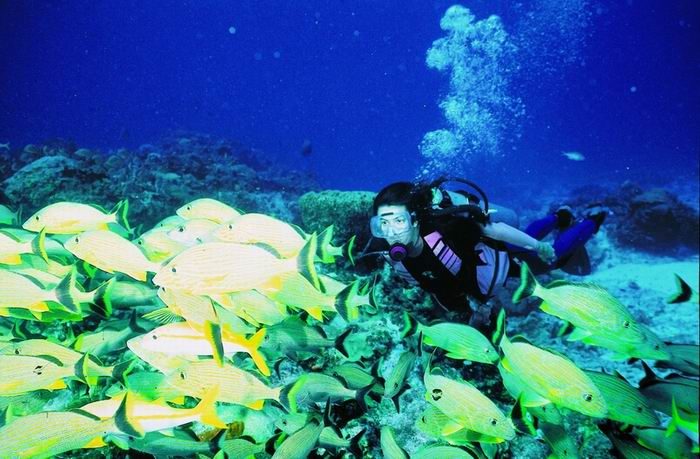
Manchones Grandes is a wall of coral made up mostly of Elkhorn coral, here huge schools of fish like grey and yellowtail snapper and the extensive family of grunts add to the decoration of the spectacular underwater environment.
Cuevones and Banderas reef, also in the Bay of Mujeres are full of beautiful color and an abundance of marine life can be observed here at just 40 feet.
On the back side of the island, towards the open sea, a small barrier of coral known as Media Luna reef offers the occasional opportunity of seeing sharks that roam the area.
A visit to the shipwreck ultralteeze located 8 miles east of the island can be the highlight of the day. Large barracuda, stingrays, horse-eye Jack and red snapper are the most commonly seen in habitants at this extraordinary site. Recommended only for certified divers, depths here reach 90 feet and the current is strong. Your guide should be a divemaster or instructor.
DIVING CENOTES
Called end of last frontiers for exploration, the cenotes of the Yucatan are the scene of concentrated effort by a dedicated team of divers, the CEDAM Cave Diving Team. Every year since 1987 the CEDAM Cave Diving Team's Director, Mike Madden, has assembled a team of divers and support personnel to pursue the exploration of an enormous underwater cave.
This colossal labyrinth called Nohoch Nah Chich is located just north of the ancient Mayan city of Tulum. The Nohoch Nah Chich cave system now has 158,432 feet (30 miles) of surveyed underwater passages and is listed In the Guinness Book of Records since 1991 as the longest underwater cave system in the world. Underwater cave exploration involves a fusion of trained and experienced team members and the utilization of specialized equipment. Redundancy is a cardinal rule in cave diving as the environment is absolutely fatal to a diver who cannot solve a problem. Many of the exploration dives m the Nohoch system take the dive teams 12,000 feet from their point of entry. Diver propulsion vehicles are used to speed the dive teams and out of the cave and multiple powerful underwater lighting systems are corned to ensure that the team is not left without light in the eternal darkness thousands of feet into the cave. Cenote means a "natural well."
It is a form of collapse of the limestone karst at the land surface. Limestone is a soft, porous, sedimentary rock that has evolved over millions of years. The cycle of life in the oceans creates layers of sediments, corals and animal remains that stack upon each other and fuse together from pressure. These layers vividly show geological history and illustrate the evolution of life. It is a masterpiece of what once existed in the past. The coastal area of the Yucatan between Playa del Carmen and Tulum is an area of a low-relief lime stone crust with minimal soil cover and rapid infiltration of rain water.
This means there is no way for rain to drain on the surface. Thus, no rivers or streams exist in the Yucatan peninsula. all water must drain or move underground. The logical direction is towards the Caribbean Sea. This horizontal movement of water carves It's way to the sea following the path of least resistance.
This meandering flow allows nature to weave a maze of conduits much like a spider web. It has been determined that most of the water flows form the northwest to south-east. It emerges along the Yucatan coast forming a vast array of springs. Many are crescent-shaped inlets known as caletas. These underground streams provide the opportunity for the formation of cenotes and a window to the aquifer system.
The size and shape can be al every dimension possible, cracks or holes. Because it is an "overhead environment" there are only two ways the scuba diver can safely dive the cenote. The best way is to seek training for this specialized type of diving.
PHOTOS