
The Maya watched the sky for centuries and kept track of time with astonishing precision. They did not use a single calendar but several counts running at the same time, like gears: the sacred 260-day Tzolkin, the 365-day solar or civil Haab, and the Long Count, which counted the days since the beginning of the current era.

Astronomers and architecture
Ancient codices show Maya astronomers watching the stars: the Codex Mendoza (1542) shows a seated observer looking at a group of stars, and the Madrid and Bodley codices show astronomers inside temples decorated with stars and observation instruments. In some temples the astronomer stood on a special stone to follow the movement of the sky, such as the solstices and equinoxes.
That knowledge was built into their architecture. Sites such as Tikal, Nakum, Ixkun and Uaxactún have astronomical commemoration complexes, next to the ball courts, aligned with sunrise on the solstices and equinoxes: March 21, June 21, September 21 and December 21. The most famous example is near Cancun: on the equinoxes the shadow of a serpent descends the staircase of El Castillo at Chichén Itzá, and El Caracol at the same site was an observatory.
Three counts of time
Three counts coexist in the Maya calendar: the sacred Tzolkin, the civil Haab and the Long Count. Pre-Hispanic calendars were used all over Mesoamerica, and some communities in the Guatemalan highlands and in the Mexican states of Veracruz, Oaxaca and Chiapas still keep the count of days today.
The Tzolkin, a sacred 260-day calendar
The Tzolkin has 260 days and was used above all for rituals and farming, especially the cycles of corn. It combines 20 day names, which were considered gods, with the numbers 1 to 13, like two interlocking wheels. The calendar starts on 1 Imix; then the number and the name move forward together: 2 Ik, 3 Akbal, 4 Kan… After 13 the numbers start again while the names keep going: after 13 Ben comes 1 Ix. The names repeat every 20 days and the numbers every 13, and when Imix and the number 1 meet again, 260 different combinations have gone by.
Mayan day names (kin) and their meaning
| Glyph | # | Mayan day | Meaning | Interpretation |
|---|---|---|---|---|
 | 1 | Imix | Breast | Start |
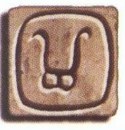 | 2 | Ik | Wind | Communicates |
 | 3 | Akbal | Night | Thinks |
 | 4 | Kan | Seed | Blooms |
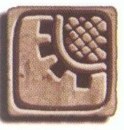 | 5 | Chicchan | Snake | Power |
 | 6 | Cimi | Death | Transformer |
 | 7 | Manik | Hand | Realization |
 | 8 | Lamat | Cross (star) | Form |
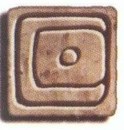 | 9 | Muluc | Moon | Cleanses |
 | 10 | Oc | Dog | Flatterer |
 | 11 | Chuen | Monkey | Makes |
 | 12 | Eb | Ladder | Free |
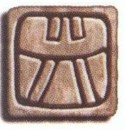 | 13 | Ben | Reed | Explores |
 | 14 | Ix | Jaguar | Time |
 | 15 | Men | Eagle | Vision |
 | 16 | Cib | Candle | Intelligence |
 | 17 | Kaban | Earth | Moves |
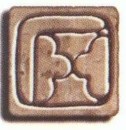 | 18 | Edznab | Mirror (flint) | Reflects |
 | 19 | Cauac | Thunder | Generates |
 | 20 | Ahau | Lord (sun) | Illuminates |
The interpretation of each day follows the chart "Interpretation of the Mayan Calendar"; meanings vary by source and region.
The Haab, a 365-day solar calendar
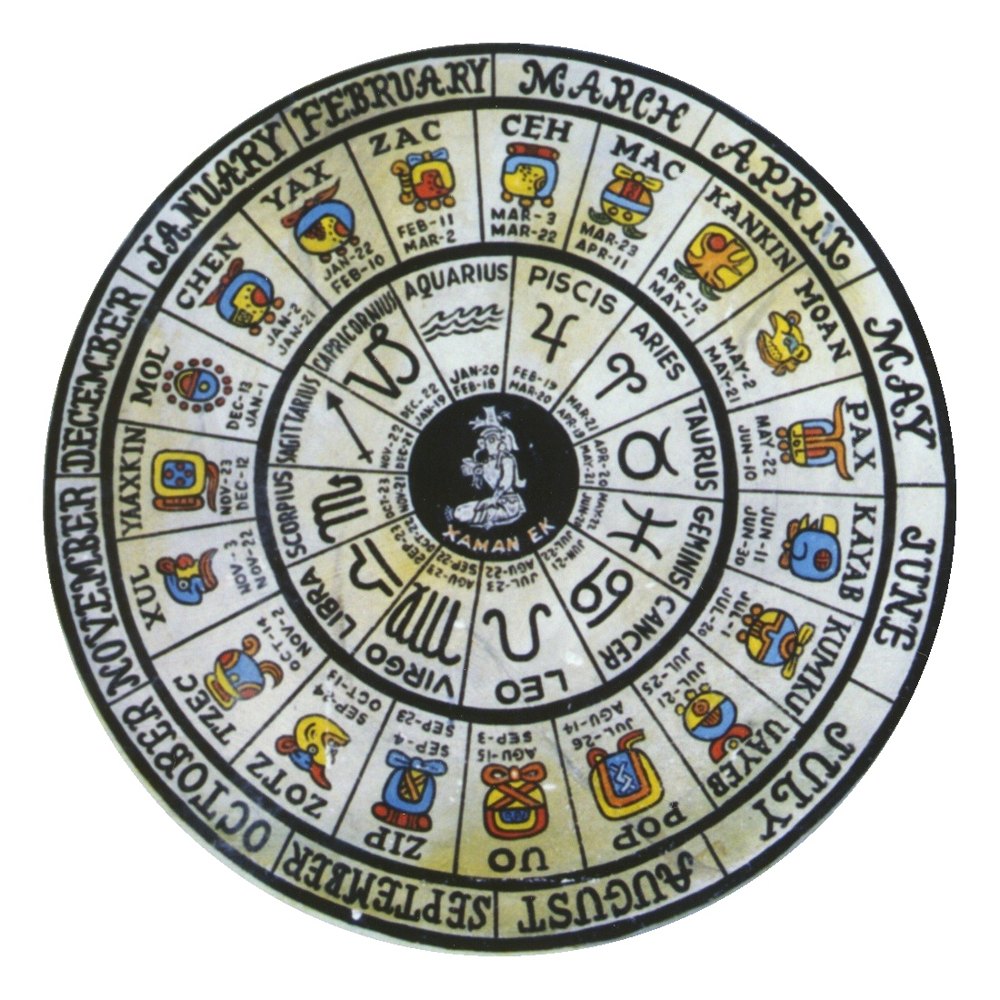
The Haab measures the solar year: 18 months of 20 days make a tun of 360 days, plus 5 days called Uayeb ("bewitched stairway") to complete the 365 days the Earth takes to go around the Sun, Kinich Ahau. The Uayeb days were considered unlucky: people rested and they were left out of the records. The Haab starts on 0 Pop: the first day of each month carried the number zero, because it was the moment the month began to rule, and days were counted from 0 to 19.
The Haab months and their dates in our calendar
| Glyph | Month | Meaning | Interpretation | Approx. dates |
|---|---|---|---|---|
 | Pop | Straw mat | The master | Jul 26 – Aug 14 |
 | Wo (Uo) | Little frog | Listen in silence | Aug 15 – Sep 3 |
 | Zip | Hunter | Hunt the universe | Sep 4 – 23 |
 | Tzotz (Zotz) | Bat | Initiation | Sep 24 – Oct 13 |
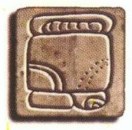 | Tzec | Foundation | Polished knowledge | Oct 14 – Nov 2 |
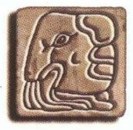 | Xul | The end | Ending | Nov 3 – 22 |
 | Yaxkin | Green (new) sun | Inner light | Nov 23 – Dec 12 |
 | Mol | Gather | Join everything | Dec 13 – Jan 1 |
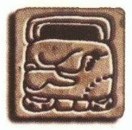 | Chen | Well | Go within | Jan 2 – 21 |
 | Yax | Green | Clear-minded disciple | Jan 22 – Feb 10 |
 | Zac | White | Synthesis | Feb 11 – Mar 2 |
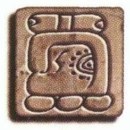 | Ceh | Deer | Conjures clouds and weather | Mar 3 – 22 |
 | Mac | To close | Closing to the void | Mar 23 – Apr 11 |
 | Kankin | Ripe sun | Wise energy | Apr 12 – May 1 |
 | Muan (Moan) | Divine bird (owl) | Vision | May 2 – 21 |
 | Pax | Music | Transcends | May 22 – Jun 10 |
 | Kayab | Song (turtle) | Song and dance | Jun 11 – 30 |
 | Kumku | Offering (granary) | Cooking essences | Jul 1 – 20 |
 | Uayeb (Wayeb) | Bewitched stairway | What is missing: 5 unlucky days | Jul 21 – 25 |
Dates follow the Maya "Xaman Ek" wheel; since the Haab has no leap year, its match with our calendar shifts over the years.
The Calendar Round: 52 years
Together, the Tzolkin and the Haab form the Calendar Round: each day has a name in both calendars, for example 4 Ahau 8 Cumku or 12 Ik 0 Pop. The same combination does not come back until 18,980 unique days, or 52 years, have gone by: the great cycle the peoples of Mesoamerica celebrated with the New Fire ceremony.
The Long Count and the baktun
To date their monuments the Maya used the Long Count, which counts the days since the beginning of the current era, set on the day 4 Ahau 8 Cumku: August 11, 3114 BC in the most accepted correlation (some authors say August 13). It is a base-20 system with one exception: a tun is made of 18 winals, to stay close to the solar year.
| Unit | Made of | Days |
|---|---|---|
| Kin | 1 | 1 day |
| Winal (Uinal) | 20 kins | 20 days |
| Tun | 18 winals | 360 days |
| Katún | 20 tuns | 7,200 days (≈ 19.7 years) |
| Baktún | 20 katuns | 144,000 days (≈ 394 years) |
| Pictún | 20 baktuns | 2,880,000 days |
| Calabtún | 20 pictuns | 57,600,000 days |
| Kinchiltún | 20 calabtuns | 1,152,000,000 days |
| Alautún | 20 kinchiltuns | 23,040,000,000 days |
A date is written with five numbers, from the largest unit to the smallest: baktun . katun . tun . winal . kin. The stela that marks the previous era carries the date 13.0.0.0.0, 4 Ahau 8 Cumku: 13 baktuns, with the introductory glyph and the Tzolkin (4 Ahau) and Haab (8 Cumku) dates. The word baktun comes from the Yucatec Mayan words b'ak' (400) and tun (stone), because a baktun is 400 tuns. The larger units, from the pictun to the alautun, appear in only a few inscriptions about mythical times.
End of an era, beginning of another: December 21, 2012
On December 21, 2012 the Long Count completed 13 baktuns again (13.0.0.0.0) since 3114 BC, and baktun 14 began. There was much talk of prophecies and planetary alignments, but the only known Maya texts that mention the 13th baktun, Monument 6 at Tortuguero and Block V of Hieroglyphic Stairway 2 at La Corona, are monuments raised to celebrate the deeds of rulers, in political contexts. They do not speak of the end of the world: for the Maya time is cyclical, and when one count ends another begins.
The 13 Mayan constellations
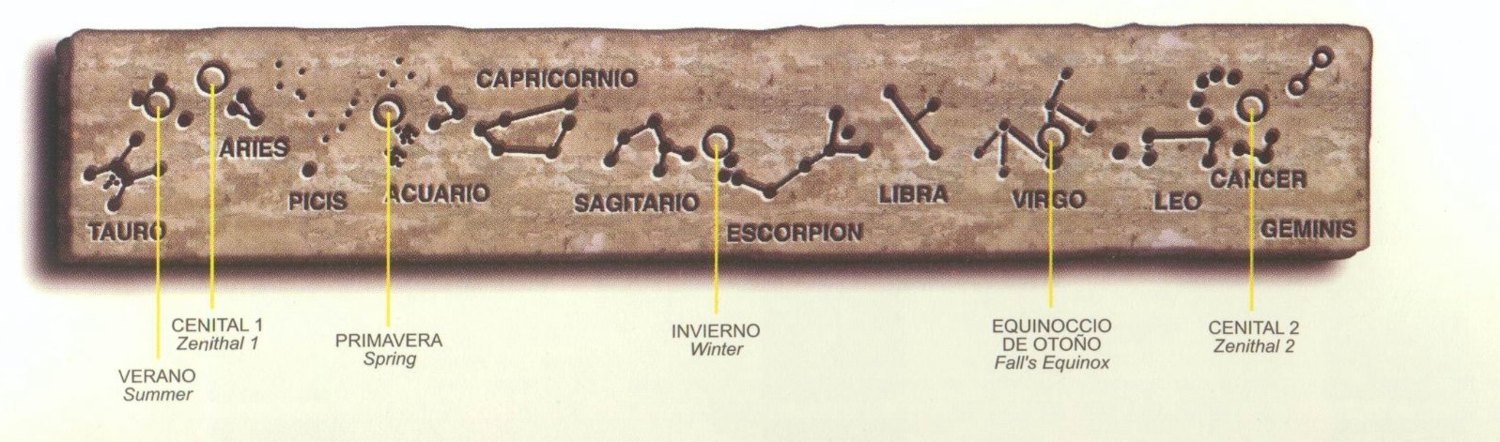
To read the messages of the sky the Maya also used an almanac of 13 constellations of about 28 days each, adjusted to the movement of the Moon: 13 lunations a year. These are the constellations, with their animal, virtue and dates according to the chart "Interpretation of the Mayan Calendar":
| Glyph | Constellation | Animal | Virtue | Dates |
|---|---|---|---|---|
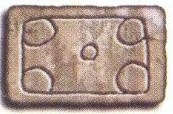 | Aak | Turtle | Patience | 28/06 – 26/07 |
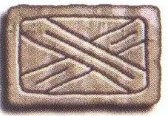 | Dzec | Scorpion | Competitiveness | 27/07 – 22/08 |
 | Ceh | Deer | Harvest | 23/08 – 19/09 |
 | Tzotz | Bat | Mystery | 20/09 – 17/10 |
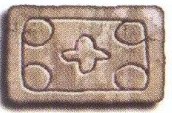 | Moan | Owl | Vision | 18/10 – 14/11 |
 | Kutz | Turkey | Trust | 15/11 – 12/12 |
 | Itzamná | Sorcerer's house | Philosophy | 13/12 – 09/01 |
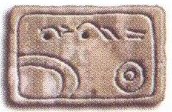 | Batz | Monkey | Memory | 10/01 – 06/02 |
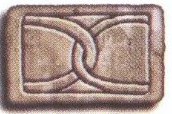 | Coz | Hawk | Intellect | 07/02 – 06/03 |
 | Balam | Jaguar | Courage | 07/03 – 03/04 |
 | Pek | Dog | Spirituality | 04/04 – 01/05 |
 | Kan | Serpent | Strength | 02/05 – 29/05 |
 | Hunab Ku | Heart of heaven | Loyalty | 30/05 – 27/06 |
The Mayan World
In the late 1980s Mexico, Guatemala and Belize, later joined by Honduras and El Salvador, launched the Mundo Maya project to promote as a single destination the region where Maya culture has lived for more than two thousand years. From Cancun you can visit some of its cities: Chichén Itzá, Tulum, Cobá, Ek Balam and Uxmal.